A garden room that is cold by November is a garden room you quietly stop using. The good news is that heating one does not have to be complicated or costly, provided the building itself is doing its job. The trick is to match the heater to how the room is actually used: a garden office occupied five days a week has very different needs from a summer house that comes alive for Sunday lunches and the odd birthday. Here is how the main options compare.
Whatever you eventually fix to the wall, heat loss decides the bill. A thin-walled shed with single glazing and a bare concrete floor will bleed warmth faster than any heater can replace it, and no amount of clever technology changes that.
Before spending a penny on heating, check the basics: loft or roof insulation, wall insulation, floor insulation and draughts around doors and windows. A properly built garden room usually has an insulated timber frame with rigid boards between the studs, double-glazed units and an insulated floor. A converted shed often has none of that, and needs work first.
Two cheap wins are worth doing straight away. Seal gaps around the door with a decent brush or rubber seal, and put a thick rug over a cold floor. Cold floors pull warmth out of a room surprisingly quickly, and a rug costs far less than a heater.
These are the default choice for garden offices, and for good reason. They are simple, silent, need no flue and no fuel store, and a small one can run from a standard socket. Installation is genuinely easy — the main job is getting a suitable electricity supply to the building in the first place, which usually means an armoured cable run by a qualified electrician.
Running costs are the thing to watch. Electricity generally costs more per unit than mains gas, so a heater left on all day in a poorly insulated room will show up on the bill. The answer is not a bigger heater but a smaller one paired with good insulation, a thermostat and a timer. Set it to come on an hour before you head out, and let the thermostat do the rest.
Convectors warm the air, so they suit rooms used regularly and for long stretches. Safety is straightforward: keep them clear of soft furnishings and never drape anything over them.
Infrared panels warm people and objects rather than the air around them. The effect is almost immediate — you feel it within a minute or two of switching on, which makes infrared ideal for a summer house or hobby room used in short bursts.
The flip side is that the warmth vanishes the moment you switch off, and the room itself stays cool. If you want a space that is already comfortable when you walk in, infrared alone will disappoint. Mount the panel on a wall or ceiling aimed at where you actually sit or work, rather than at the middle of the room.
A useful combination for occasional use is an infrared panel for instant comfort plus a small oil-filled radiator on a low setting to take the chill off the fabric of the room.
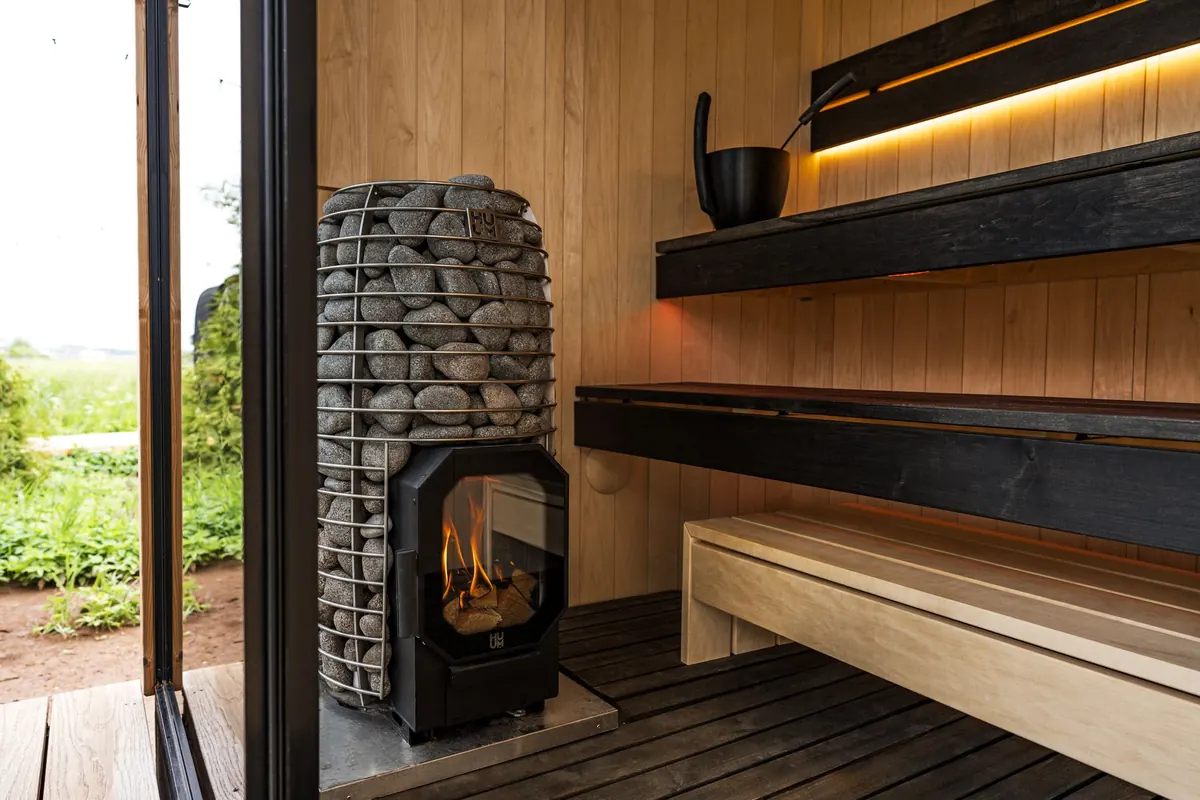
A wood burner gives the most atmosphere by far, plenty of heat and a degree of independence from the grid. It also asks more of you than any other option: space for a hearth and clearances, a flue, proper ventilation, a supply of dry seasoned wood and somewhere to store it.
In a small garden room, output is the common mistake. A stove sized for a large living room will turn a three-by-four-metre studio into a sauna, and you end up with the door open in January. Speak to a qualified solid fuel installer about the right size, the flue route and Building Regulations, and fit a carbon monoxide alarm regardless of what you choose.
Check local rules on smoke before you buy. If your property sits in a Smoke Control Area, you must burn authorised fuel or use an exempt appliance, and your local authority can confirm which applies. Never leave a solid fuel fire unattended in a garden building, and never bring a barbecue or portable generator indoors for warmth.
Efficient and increasingly popular, but the equipment, outdoor unit and installation rarely make financial sense for one small room. They come into their own in larger, very well insulated garden buildings or when connected to a wider home system.
Cheap to buy, silent, and they keep giving out heat for a while after switching off. Slow to warm a room, which makes them better for background warmth and frost protection than for instant comfort.
Lovely under tile or stone, and it warms the whole room gently from the floor up. It responds slowly, so run it on a timer, and make sure there is insulation beneath it — otherwise you are heating the ground.
Powerful, but bottled gas releases a lot of moisture and needs ventilation, which works against a sealed, insulated room. Generally best avoided in a garden office, especially one with computers and paperwork inside.
Work through it in the right sequence and you will spend less and stay warmer.
Anything involving fixed wiring, a flue or a solid fuel appliance should be signed off by a qualified professional, and it is worth checking whether Building Regulations approval is needed before work starts. Get that side right, and the rest is simply choosing the heater that fits your habits.
Photo: HUUM │sauna heaters / Pexels

Zone, shelter and light a corner of your garden properly, and you will use it from early spring to late autumn — not...

Cold surfaces, trapped moisture and poor airflow make sheds sweat. Here is how to find the cause, stop the drips and...
Ten practical, affordable ways to make a garden shed harder to break into, from better locks and hinge bolts to...

Cosy wooden garden rooms and outdoor retreats.
